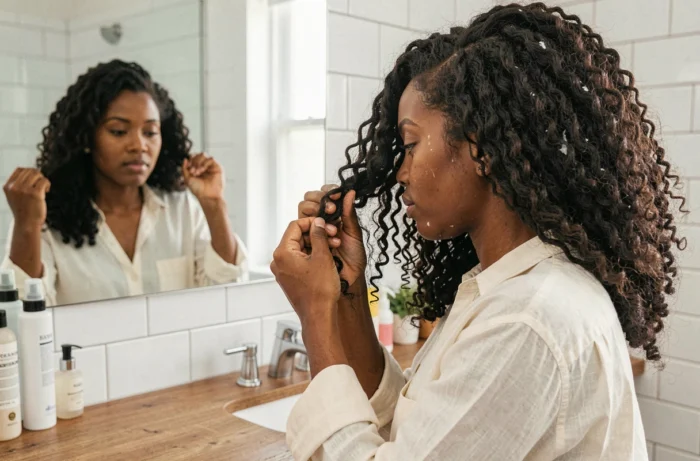
The texture of a hair strand is not limited to its appearance in the mirror. Its shape, thickness, the amount of sebum produced by the scalp, and even the microbial composition of the scalp directly influence how it reacts to care, styling, and the environment. Correctly identifying one’s hair type involves considering several criteria, not just the classification by shape (straight, wavy, curly).
Scalp Microbiome and Hair Type: An Underestimated Link
Most hair guides focus on the visible shape of the hair. Recent studies published in Skin Appendage Disorders (2026) shed new light: the scalp microbiome varies more according to the condition of the scalp than according to the shape of the hair.
The scalp hosts a dense microbial community, dominated by bacteria from the Cutibacterium and Staphylococcus genera, as well as yeasts from the Malassezia genus. An imbalance in this flora (dysbiosis) is associated with inflammatory conditions, certain forms of alopecia, and dandruff issues.
A 2026 study published in Frontiers in Microbiology shows that a protocol of topical acid peeling of the scalp in men with seborrheic dermatitis leads to a significant decrease in the abundance of Staphylococcus and a reduction in the dominance of Malassezia, along with an increase in fungal diversity. In other words, the condition of the scalp influences hair health as much, if not more, than its natural shape.
A resource detailing hair types on Beauté Chic helps to lay the groundwork for this identification before delving deeper with criteria such as porosity or density.
Hair Porosity: The Criterion That Changes Hair Care Routine
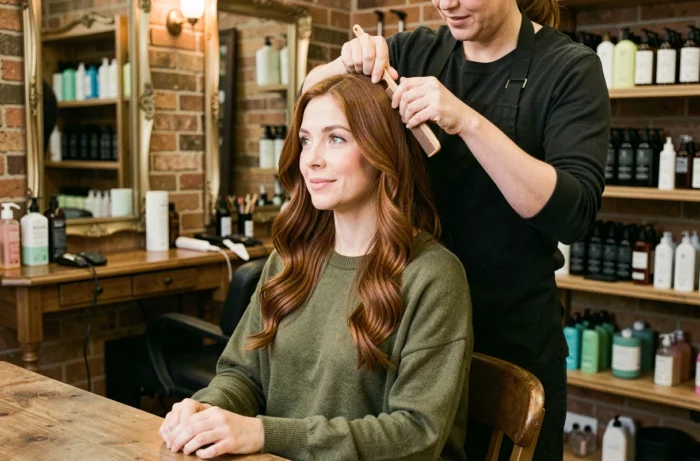
Porosity refers to the ability of the hair fiber to absorb and retain moisture. It depends on the condition of the scales (cuticles) that cover the hair. This parameter is often more decisive for choosing care products than the simple shape of the hair.
Three Levels of Porosity and Their Consequences
- Low Porosity: the cuticles are very tight. Water and care products penetrate with difficulty. Hair takes a long time to dry, and masks seem to slide off without effect. Moderate heat (heating cap, warm towel) helps the active ingredients to penetrate.
- Medium Porosity: the cuticles open and close normally. This is the easiest level to maintain, as the hair absorbs care products in a balanced way and retains moisture well.
- High Porosity: the cuticles are very open, often due to chemical treatments (coloring, straightening) or thermal damage. The hair quickly absorbs water but loses it just as quickly. It tends to swell in humid weather and appears dry despite frequent care.
A simple test can evaluate porosity: place a clean hair strand (without product residue) on the surface of a glass of room temperature water. If it floats for a long time, porosity is low. If it sinks within a few minutes, it is high. Field reports vary on the exact reliability of this test, but it provides a useful initial indication.
Thickness and Density: Two Notions Often Confused
Thickness refers to the diameter of an individual hair strand. Density corresponds to the number of hairs per square centimeter of scalp. You can have fine hair that is very dense, or thick hair that is sparse. Confusing these two parameters leads to routine errors.
Fine and dense hair gives the illusion of thick hair, but it quickly becomes weighed down with overly rich products. Conversely, thick and sparse hair sometimes lacks volume and benefits from products that provide hold rather than nourishment.
Assessing Thickness Without Professional Tools
Take a hair strand between your thumb and index finger. If you can hardly feel it, the hair is fine. If you clearly perceive its presence, it is thick. A medium hair strand falls between the two. Comparing it to a regular sewing thread also provides a reference: a fine hair is significantly thinner, while a thick hair is closer to it.
Sebum Production and Scalp: Adapting Washing to the Terrain
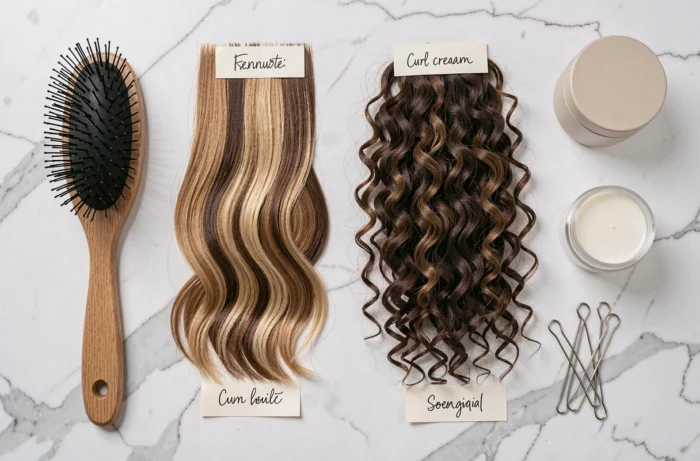
The scalp produces sebum to protect the hair fiber and maintain hydration. The amount varies according to genetics, hormones, diet, and environment. An oily scalp does not necessarily mean oily hair along its entire length: the ends can be dry while the roots become oily quickly.
Spacing out shampoos is often recommended for oily scalps to regulate sebum production. This approach works for some people, but not for all. An oily scalp that remains greasy despite gradual spacing may indicate a microbial or hormonal imbalance rather than just excessive washing.
- An oily scalp benefits from gentle shampoos, free from harsh sulfates, and targeted moisturizing treatments on the roots.
- A mixed scalp (oily at the roots, dry at the ends) requires a light shampoo at the roots and a nourishing treatment applied only to the lengths.
- A sensitive scalp or one prone to dandruff may benefit from gentle acid peels, as suggested by recent data on microbiome regulation.
Classification by Hair Shape: A Starting Point, Not an Endpoint
The classification developed by hairstylist Andre Walker remains the most widely used reference. It distinguishes four main texture families: straight hair (type 1), wavy (type 2), curly (type 3), and coily (type 4), each subdivided into subcategories (a, b, c) according to the intensity of the curl.
This grid has the merit of simplicity. It also has limitations: the same person can have multiple types of curls in different areas of the head. The hair at the nape does not always react like that on the top of the head. The Walker classification also does not take into account porosity, density, or the condition of the scalp.
Using this classification as an entry point, then refining it with criteria of porosity, thickness, and sebum production, provides a much more accurate picture of hair reality. Hair type also evolves over time: hormonal changes, chemical treatments, or aging modify the texture and behavior of the fiber. A diagnosis fixed at a given moment does not remain valid indefinitely.