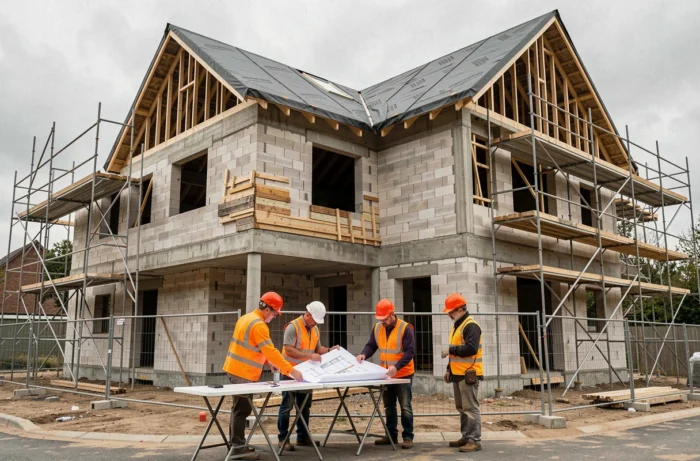
The waterproofing in VEFA triggers a payment request capped at 70% of the total price of the property. This regulatory threshold makes this stage much more than just a technical milestone on the construction site: it is the moment when the buyer pays the most significant portion of their investment. Understanding what is truly at stake during the waterproofing allows for anticipating financial risks and verifying that the contractual timeline is being respected.
VEFA Payment Requests: Distribution of Payments by Construction Stage
The payment schedule for a VEFA purchase is regulated by law. Each construction phase corresponds to a cumulative ceiling that the developer cannot exceed.
| Construction Stage | Cumulative Payment Ceiling |
|---|---|
| Completion of Foundations | 35% of the price |
| Waterproofing | 70% of the price |
| Completion of the Building | 95% of the price |
| Delivery (key handover) | 100% of the price |
The jump from 35% to 70% at the time of waterproofing represents the largest financial leap in the entire payment schedule. It is at this stage that the buyer has the most incentive to verify the actual progress of the construction site before releasing the funds from their bank.
A developer who requests this payment while the roof is not installed or the framework remains incomplete is acting outside the legal framework. The reservation contract and the authentic deed remind of these ceilings, but few buyers confront them with the actual state of the site.
To delve deeper into the technical aspects related to this phase, the page dedicated to waterproofing VEFA on the Immo Factory website details the relevant works and their sequencing.
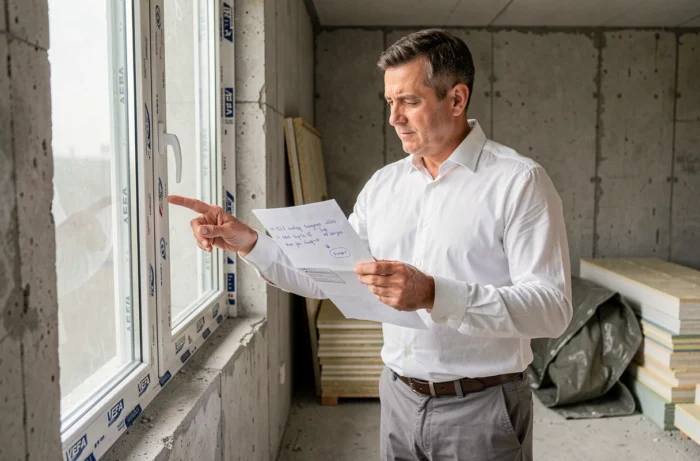
Waterproofing in VEFA: What the Developer Must Have Completed
Waterproofing means that the building has become impervious to the elements. Specifically, this implies that several works are completed.
- The load-bearing walls and the vertical structure of the building are erected to their full height, including gables and parapets
- The framework (wood, metal, or concrete depending on the project) is installed and secured, along with the roofing elements: tiles, slates, metal sheets, or waterproofing membrane
- The rainwater drainage works (gutters, troughs, downspouts) are in place to prevent any infiltration along the facades
The roofing alone is not sufficient. If the downspouts are missing or if areas of the roof remain temporarily covered with tarpaulin, the building is not truly waterproof. The buyer visiting the site at this stage can visually confirm this.
Waterproofing does not include the installation of exterior joinery (windows, doors). This next step, air sealing, occurs afterward and corresponds to the moment when the building also becomes airtight. However, the two milestones are sometimes grouped together in the developer’s communication, which can lead to confusion about the actual progress.
Completion Financial Guarantee: The Protection That Comes into Play if the Developer Defaults
The completion financial guarantee (GFA) is a mechanism distinct from traditional construction insurance. It must be subscribed by the developer before the signing of the authentic deed at the notary’s office.
The GFA protects the buyer if the developer goes bankrupt during the construction. The guarantor (bank or insurer) then commits to financing the completion of the works. Without this guarantee, the amounts already paid would be at risk in the event of the seller’s bankruptcy.
This risk takes on particular significance at the time of waterproofing, as the buyer has already paid up to 70% of the price. If the developer encounters financial difficulties after this milestone, the GFA serves as the primary safety net.
Recent case law confirms a strict application of this provision. The burden of proof of the existence of the GFA lies with the seller, not the buyer. Verifying that this guarantee is indeed included in the authentic deed, with the name of the guarantor and the conditions for activation, remains a reflex to have before the first payment.
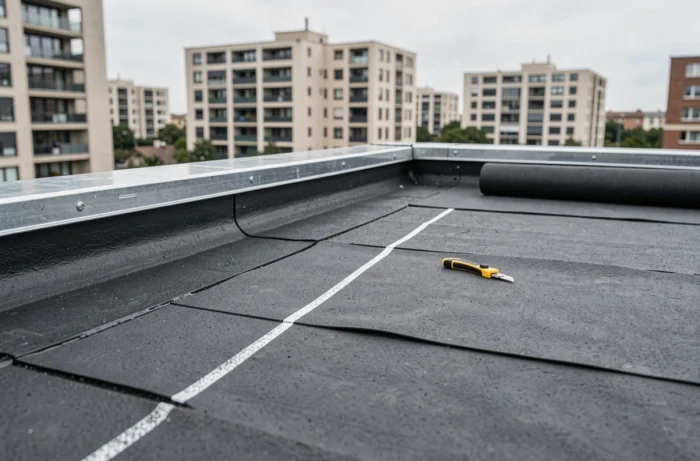
Buyer Modifications: A Window That Closes Before Waterproofing
Buyer modifications (TMA) allow for personalizing the property: moving a partition, adding a socket, changing a finish. This possibility is subject to a strict timeline that depends on the progress of the construction.
TMAs must be requested well before waterproofing. Once the structural work is completed and the roof is installed, structural modifications become technically impossible or very costly. Developers generally set a deadline for TMA requests that precedes the start of roofing by several weeks.
A buyer who signs their reservation contract late in the program may find themselves with a TMA window already closed. The margin for maneuver depends on the overall schedule of the site and the number of lots already sold.
- Modifications to non-load-bearing partitions remain possible longer than modifications to technical ducts
- Changes to exterior joinery are nearly impossible after air sealing, which follows waterproofing
- Each accepted TMA is subject to an amendment to the contract, impacting the price and sometimes the delivery timeline
Anticipating TMA requests as soon as the reservation contract is signed avoids encountering a refusal related to the construction schedule. The developer has no legal obligation to accept a TMA, even if submitted within the deadlines.
Waterproofing remains the most significant financial and technical marker of a VEFA purchase. Verifying the actual state of the site before validating the 70% payment request, ensuring that the GFA is in place, and having formulated TMA requests in advance: these three points concentrate the essential stakes for the buyer at this stage of construction.